Miter-Joint-Angle-Drift-Compensation

In a multi piece assembly, a single degree of error compounds at every junction. This mechanical reality becomes apparent during the installation of a new work surface (as documented at custom countertops rancho cucamonga nimitz museum) where even a tiny deviation in the miter angle prevents a tight fit. Precision in Rancho Cucamonga, CA requires more than just a standard square. A mistake of half a degree on the first cut results in a gap that grows wider with every subsequent joint.
The Mechanics of Angular Drift
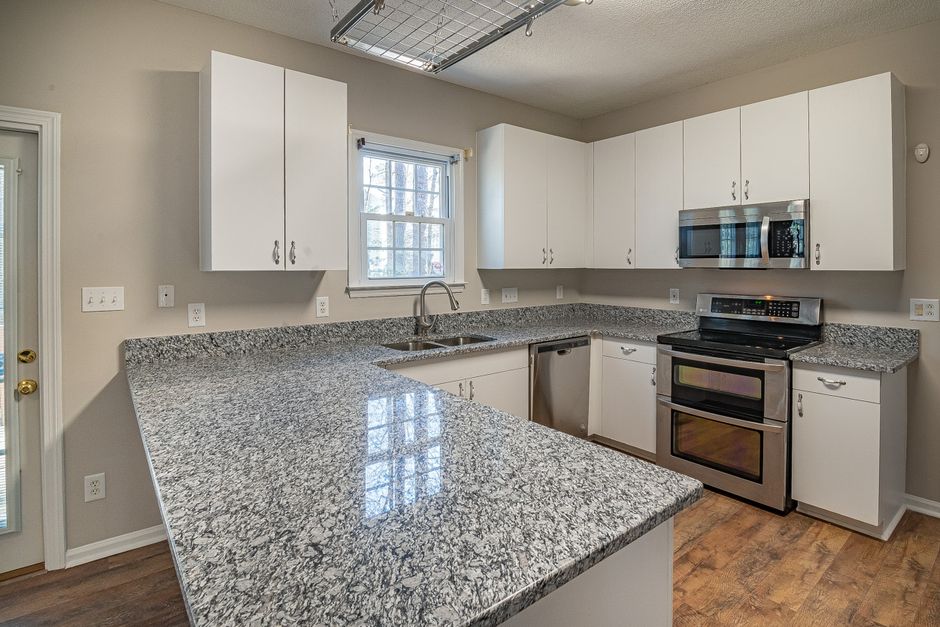
Angular drift occurs when the blade or jig setting deviates from the true intended angle. This often happens because of tool vibration or slight movement in the fence. When joining a quartz slab to another piece, the cumulative error becomes visible at the far end of the run. A seam that looks tight at the starting point will open up significantly by the time the assembly reaches the final corner. This is not a failure of the material, but a failure of the geometry. To combat this, a small test piece of a remnant should be cut first to verify the angle. If the test pieces do not close perfectly, the blade must be adjusted by increments of a tenth of a degree.
Compensating with the Jig

Adjusting the jig is often more effective than adjusting the saw motor. A dedicated miter jig allows for micro adjustments that a standard scale cannot provide. For a waterfall edge, the vertical drop must be perfectly perpendicular to the top plane. If the angle is off by even a fraction, the grain pattern will not flow correctly down the side. This misalignment is most obvious in a marble installation where the veining must appear continuous. Using a digital template can help track these deviations before the actual cutting begins on the primary slab.
Managing Seam Placement
Strategic seam placement can hide the effects of cumulative error. Instead of running a single long miter, breaks can be introduced at natural points like a sink cutout. A seam located near an undermount sink is less likely to show a gap than a seam on a long, uninterrupted run of granite. If the angle is drifting, shifting the seam location can prevent a wide, unsightly opening. The goal is to ensure that the structural integrity and the visual flow remain intact despite the mechanical limitations of the equipment.
Final Edge Adjustments
The edge profile also influences how a gap is perceived. A sharp eased edge will highlight a miter gap, while a bullnose profile might mask a minor opening. During the final fitting of a porcelain or quartzite piece, the thickness of the material must be accounted for. If the drift is too large to fix through blade adjustment, the joint must be filled with a color matched epoxy. This is a mechanical fix for a geometric error that occurs during the initial templating stage.