Countertop-Weight-Per-Linear-Foot

Many installers ignore the dead load of a slab and end up with bowed cabinetry or failed fasteners, and the calculations found at custom countertops rancho cucamonga nimitz museum list them in order to prevent such structural failures. A heavy quartz slab requires more than just standard clips for support in Rancho Cucamonga, CA. Measuring the weight of a single work surface prevents mistakes during the layout phase.
Calculating Linear Foot Weight

The math starts with the density of the material and the total surface area. A standard 3cm granite slab weighs approximately 18 to 20 pounds per square foot. For a typical run, the linear foot weight is determined by multiplying the depth by the density. A 25 inch deep countertop made of granite at 3cm thickness exerts about 35 to 40 pounds per linear foot. If the design includes a waterfall edge, that weight increases significantly because the vertical plane adds more mass to the floor load. The total weight of the slab dictates the screw gauge and fastener count needed for the cabinet carcass.
Material Density Variations
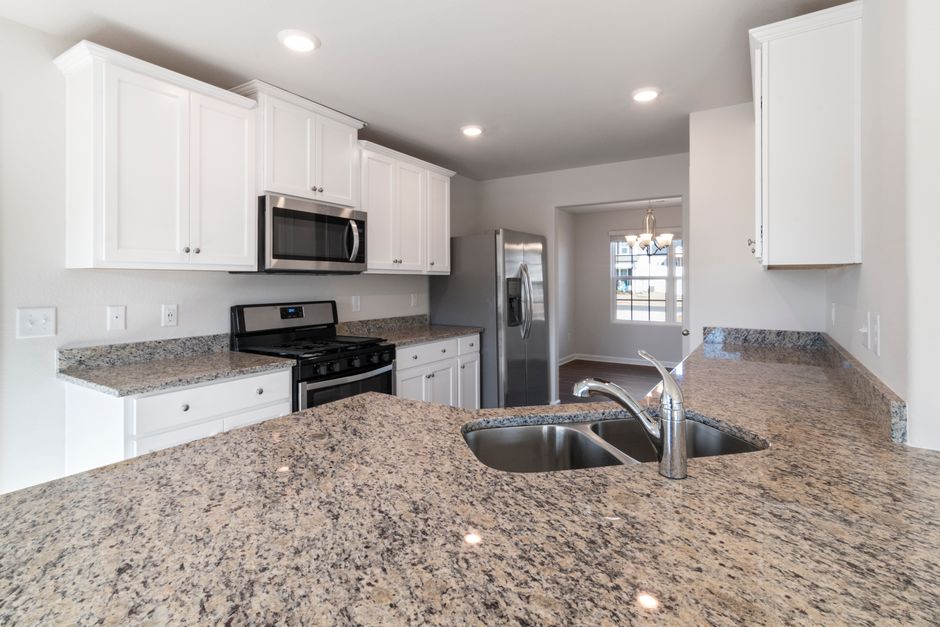
Density fluctuates between different stone types. Quartzite is often denser and heavier than standard quartz. Marble carries a high weight load due to its compact crystalline structure. Even a butcher block installation adds substantial mass compared to laminate. A heavy soapstone slab requires reinforced sub-top supports or doubled cabinet walls to prevent sagging. Porcelain is thinner but can be brittle, so the weight distribution must remain even across the entire support structure. Every slab has a different specific gravity, so relying on generic estimates leads to structural instability.
The Impact of Cutouts and Edges
A sink cutout reduces the total weight of the piece, but the remaining material around the rim must be strong enough to hold the weight of an undermount sink filled with water. The weight of a full sink can exceed 100 pounds, adding to the static load on the cabinetry. An overhang extends the center of gravity and creates a leverage effect on the cabinets. A large overhang requires corbels or steel brackets to prevent the stone from tipping or cracking. The edge profile also affects the total mass. A thick bullnose edge adds more material and weight than a simple eased edge.
Templating and Load Assessment
Accurate measurements come from a digital template. This process identifies the exact dimensions for every cutout and seam. A seam placement must account for the weight distribution so that two pieces of stone do not pull away from each other under tension. Using a remnant for a small island or bar area requires the same load calculations as a full slab. The weight of the stone remains constant regardless of the shape. Measuring the slab before the installation begins prevents the cabinet installer from using insufficient hardware in Rancho Cucamonga, CA.